Specialised diabetes care
Understand sugar, then manage it.
Diabetes care, the Deogiri way.
Proper testing, a treatment plan made for your routine, regular follow-up on WhatsApp and a diet your family can actually cook. That is how sugar stops being a scare and becomes something you simply manage.
Mon–Sat: 8:00 AM–2:00 PM & 6:00 PM–8:00 PM · Sunday closed
25+
Years treating only diabetes
10,000+
Patients cared for
In-house
Pathology lab in the same building
Same day
Most lab reports ready
Understand diabetes
Four different problems, all called "sugar".
Type 1 diabetes
The body stops making insulin on its own, usually in children or young adults. It is nobody's mistake, and it is not caused by eating sweets.
The benefit of early detection
Insulin injections are needed from day one. With the right dose and regular checks, school, job, marriage and normal life all continue.
If you see these signs
- Sudden weight loss
- Very thirsty, passing urine often
- Weakness, blurred vision
How to read your report
What the numbers on your report mean.
These are the standard ranges we explain to every patient. They tell you which side of the line you are on — but the treatment is always decided after looking at your age, your other illnesses and your full history, not from one number alone.
| Test | Normal | Borderline | Diabetes |
|---|---|---|---|
| Fasting sugar | Below 100 mg/dL | 100–125 mg/dL | 126 mg/dL or above |
| Sugar 2 hrs after food | Below 140 mg/dL | 140–199 mg/dL | 200 mg/dL or above |
| HbA1c (3-month average) | Below 5.7% | 5.7–6.4% | 6.5% or above |
Reports already done elsewhere? Send them on WhatsApp and we will tell you whether a visit is needed.
When should you get tested
Get your sugar checked if any of these fit you.
- Anyone above 40, even if you feel completely fine
- Mother, father, brother or sister has diabetes
- Extra weight around the stomach, or very little walking in the day
- Sugar was high in an earlier pregnancy, or PCOS
- Wounds healing slowly, tingling or numbness in the feet
- Very thirsty, passing urine often, unexplained weight loss or tiredness
Our approach
Your check-up, one step at a time.
01
Sitting with the doctor
Dr. Deepak Bhosle takes your full history and examines you — complaints, family history, current medicines, work and eating habits.
02
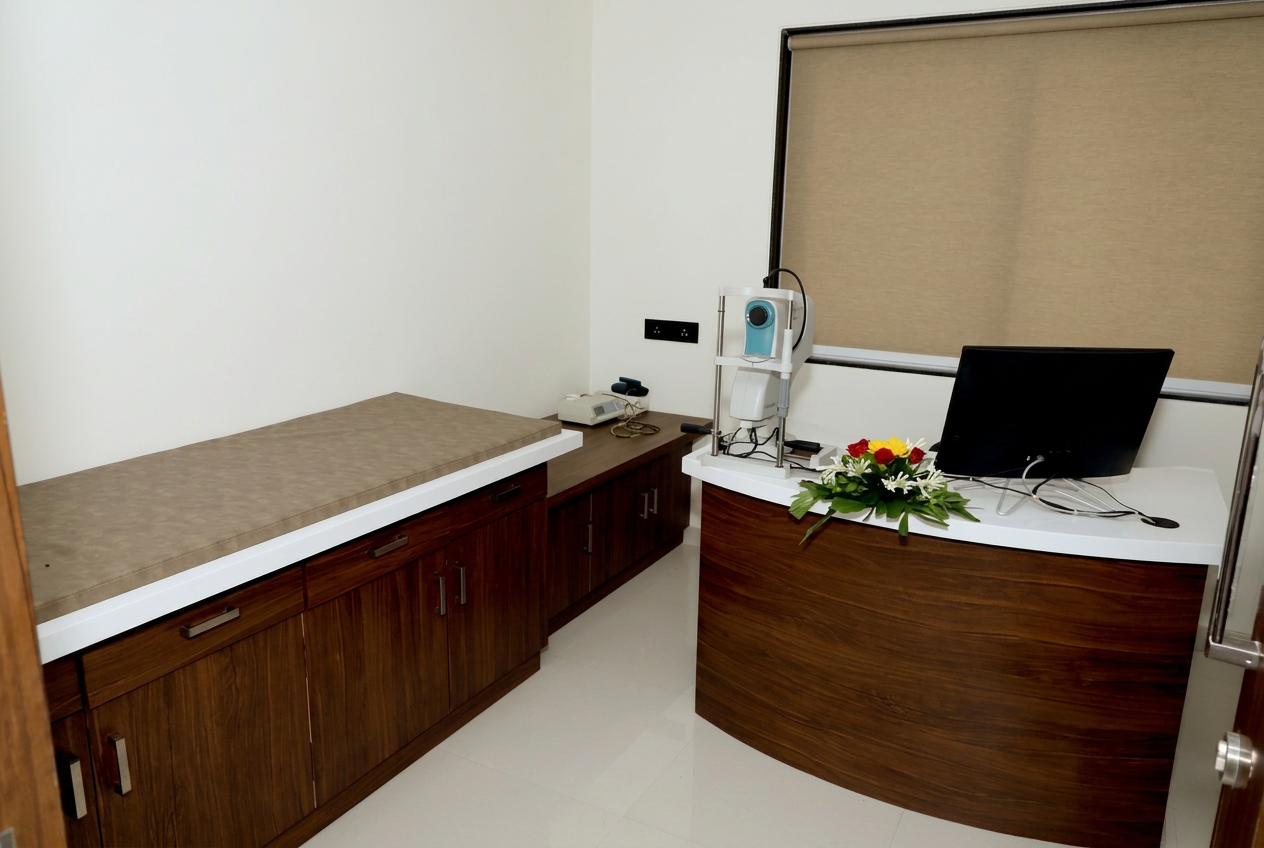
Blood tests in the same building
Blood is taken here itself. HbA1c on our D-10 machine, plus cholesterol, kidney, liver and thyroid tests. No running to another lab.
03
Checking eyes, feet, kidneys
VPT for nerves, doppler for blood flow in legs and fundus camera for the eyes — done before any problem starts troubling you.
04
A plan made for your home
Medicines, insulin if needed, and a diet based on what your family actually cooks, your budget and your daily routine — explained in simple language.
05
We stay in touch
CGMS/AGP reviews and WhatsApp follow-up, so the plan keeps changing as your body and your life change.
Full-body screening
Sugar does not stay only in the blood — it slowly affects eyes, feet, kidneys and heart.
High sugar damages small blood vessels and nerves quietly for years, without any pain. A yearly check here finds that damage while it can still be stopped.
Eyes
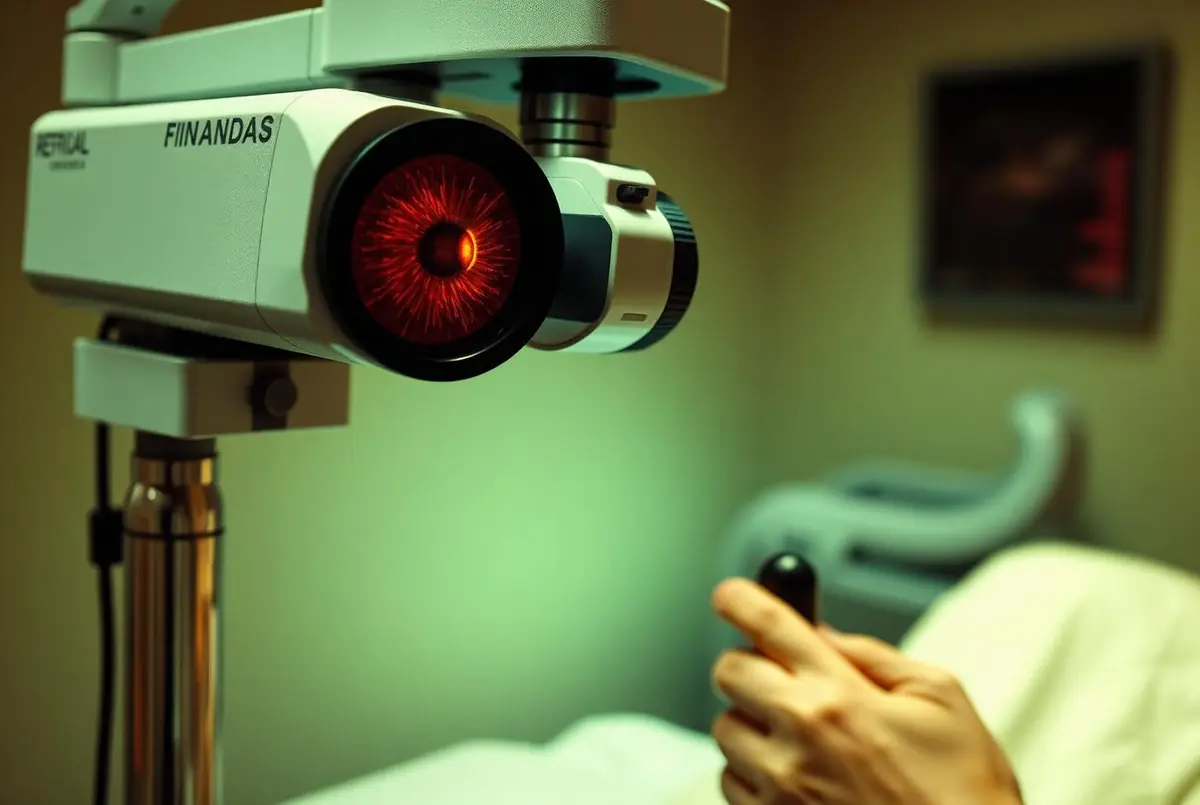
A fundus camera photo of the back of the eye. Diabetes damages eyes without any pain, so we check every year and send you to a retina specialist early if needed.
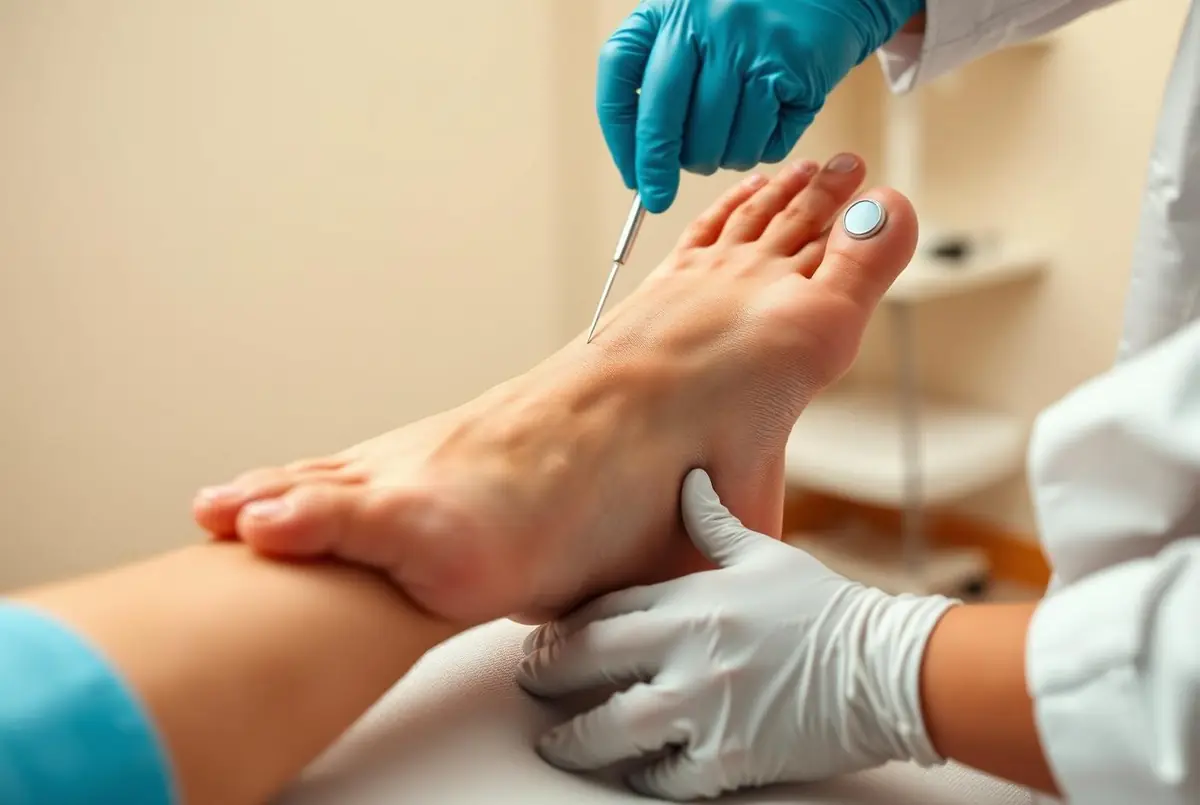
Feet and nerves
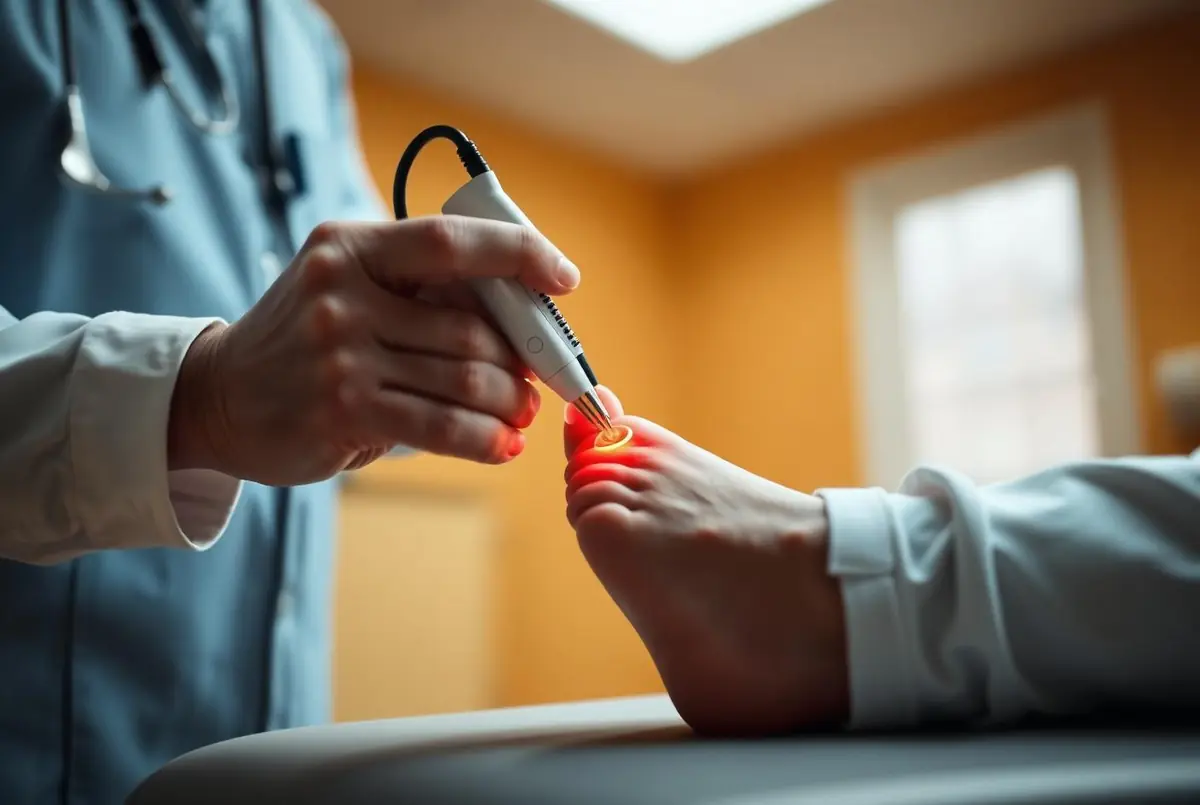
The VPT machine checks whether your feet can still feel properly. Catching numbness early is the best way to avoid wounds and, in bad cases, amputation.
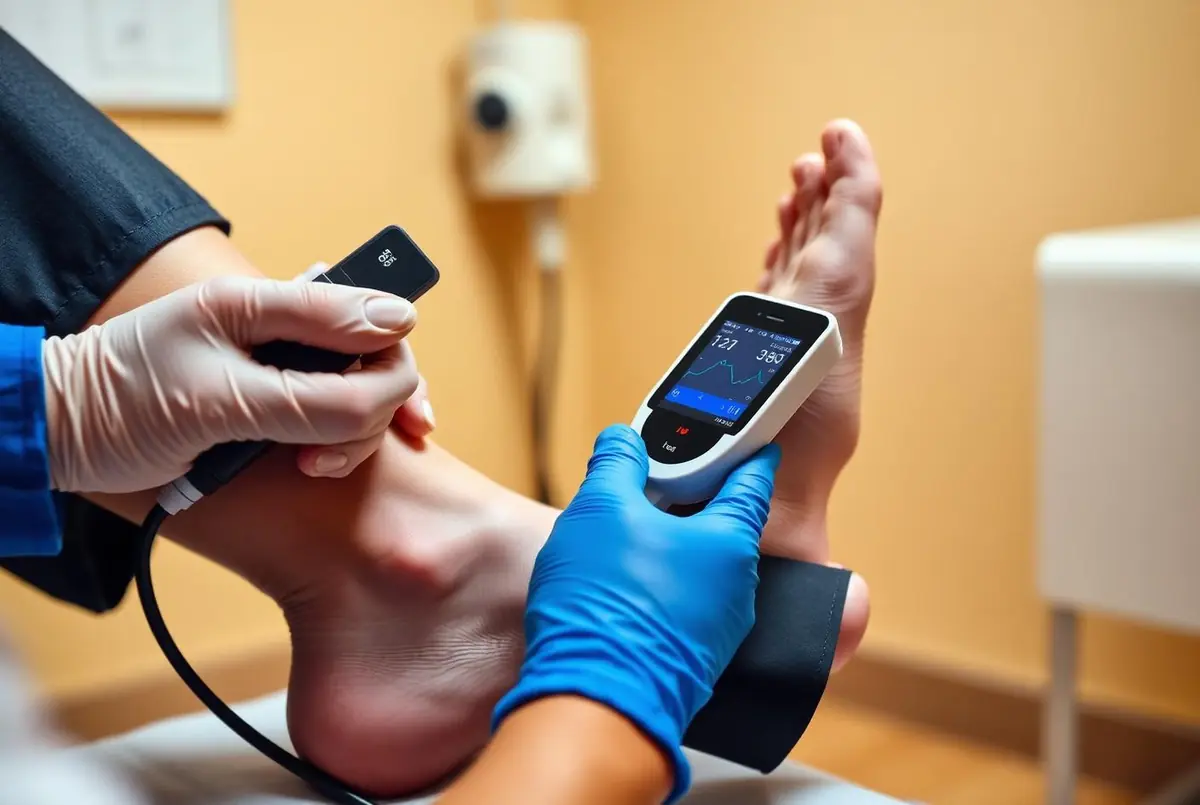
Blood flow in legs
Doppler and ABI show whether blood is reaching your legs and feet properly, and whether a wound will be able to heal.
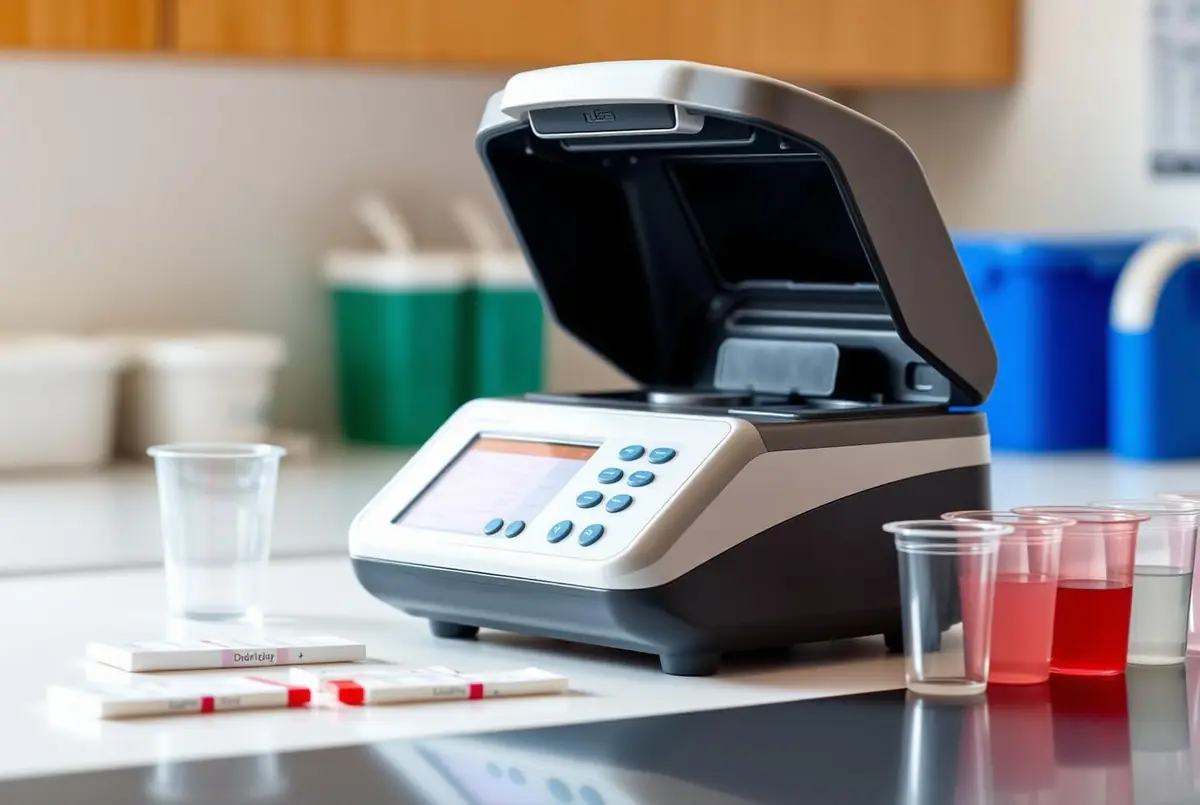
Kidneys
Urine protein, creatinine and eGFR checked over time. Early protein leak can be reversed; late kidney damage cannot.
CGMS / AGP
Two weeks of sugar, on one page.
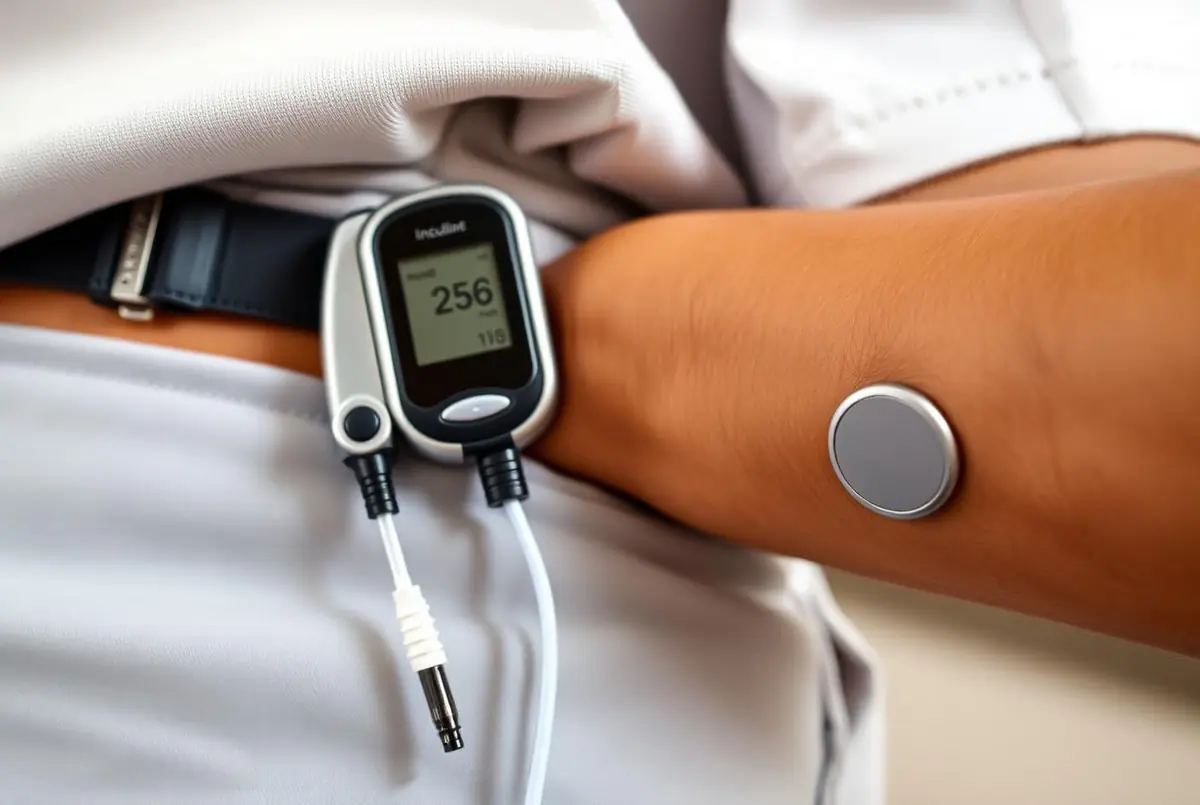
A small sensor is stuck on the upper arm. It reads your sugar every few minutes, day and night, with no finger pricks. You do not have to remember anything or write anything down.
All those readings become one simple 24-hour graph (AGP). It shows the sugar falling at 3 AM, the spike after lunch and the early morning rise that a glucometer can never catch — so we change the right dose at the right time instead of guessing.
Ask about CGMS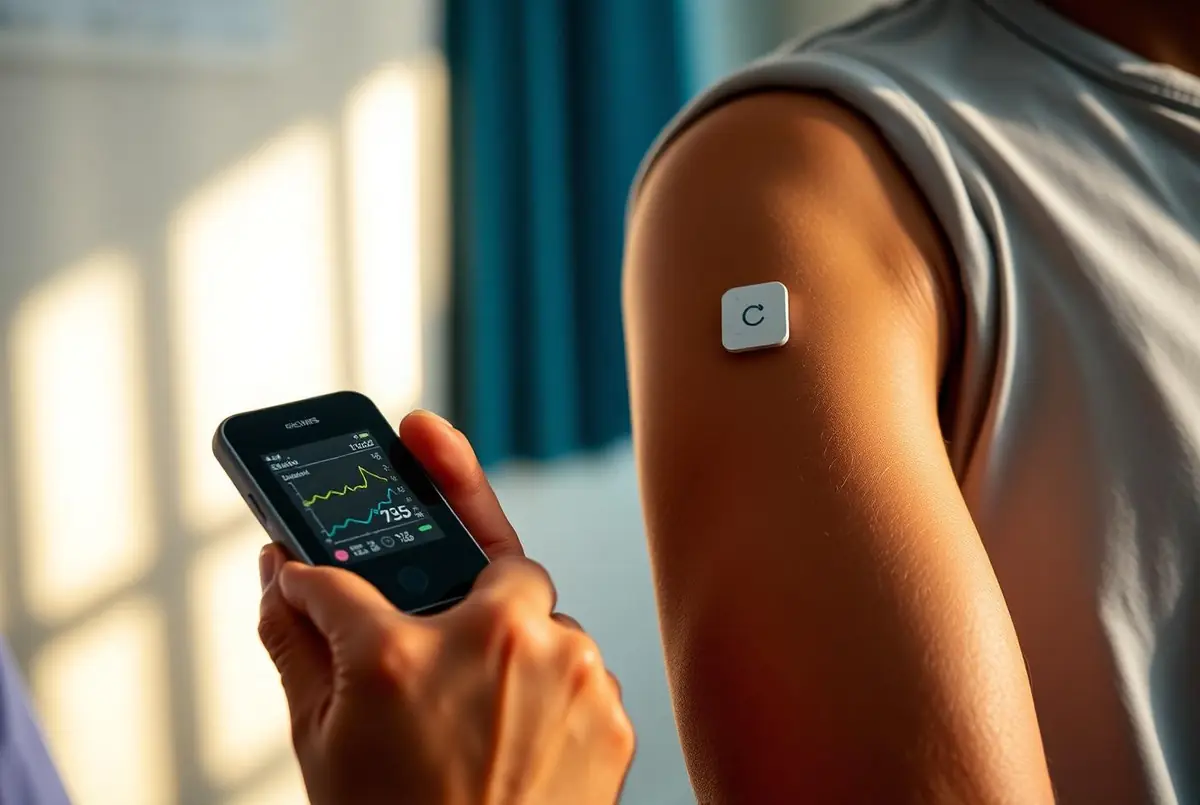
Insulin pump clinic
Fewer injections, better control.
Who is it suitable for
Type 1 patients, anyone whose sugar falls too low often or goes up and down a lot, people already taking 3-4 injections a day, mothers planning pregnancy, and people doing shift duty.
Why it works better
The pump gives a very small dose continuously through the day and an exact dose at meal times — much closer to how the body itself works than four fixed injections.
What we do
We check if the pump suits you, help choose it, train you and your family hands-on, set the doses, and review the pump data and adjust doses at every visit.
Gestational diabetes
Sugar in pregnancy is not a reason to panic.
Sugar going up in pregnancy is common, and when it is handled properly both mother and baby stay perfectly fine. Most of our mothers control it with diet alone. We keep the pregnancy normal — regular meals, regular sonography, regular life — while we watch the numbers and work along with your gynaecologist.
Speak to usTesting
The sugar (GTT) test between 24 and 28 weeks — earlier if there is family history, sugar in an earlier pregnancy, PCOS or extra weight.
Treatment
First a small-frequent meal plan, home sugar readings checked every week, and pregnancy-safe insulin only if the numbers do not come down.
At delivery
Planned along with your gynaecologist, sugar watched during labour, and the baby checked right after birth.
After delivery
Sugar test again after 6-12 weeks, then once a year — sugar in pregnancy means higher risk later, which is easy to handle if you keep checking.
Your questions
Questions we are asked every day.
Not sure where to begin?